Getting Started
Creating an MCP server in Boltic is the first step toward exposing your data sources, business logic, and integrations as tools that AI applications can discover and use. This guide walks you through the process of creating an MCP server, which serves as the foundation for connecting your systems to AI-powered applications like Cursor, Claude Desktop, and other MCP-compatible tools.
Prerequisites
Before creating an MCP server, ensure that:
- You have an active Boltic account
- You have the necessary permissions to create MCP servers in your workspace
- You have a clear understanding of what capabilities you want to expose (e.g., Workflows, Integrations, or Serverless functions)
- You've identified the use cases for your MCP server (e.g., customer data access, e-commerce operations, internal tooling)
Steps
- Login to Boltic.io.
- In the Boltic dashboard, navigate to the MCP tab from the main landing page. This opens the MCP interface where you can create new ones.
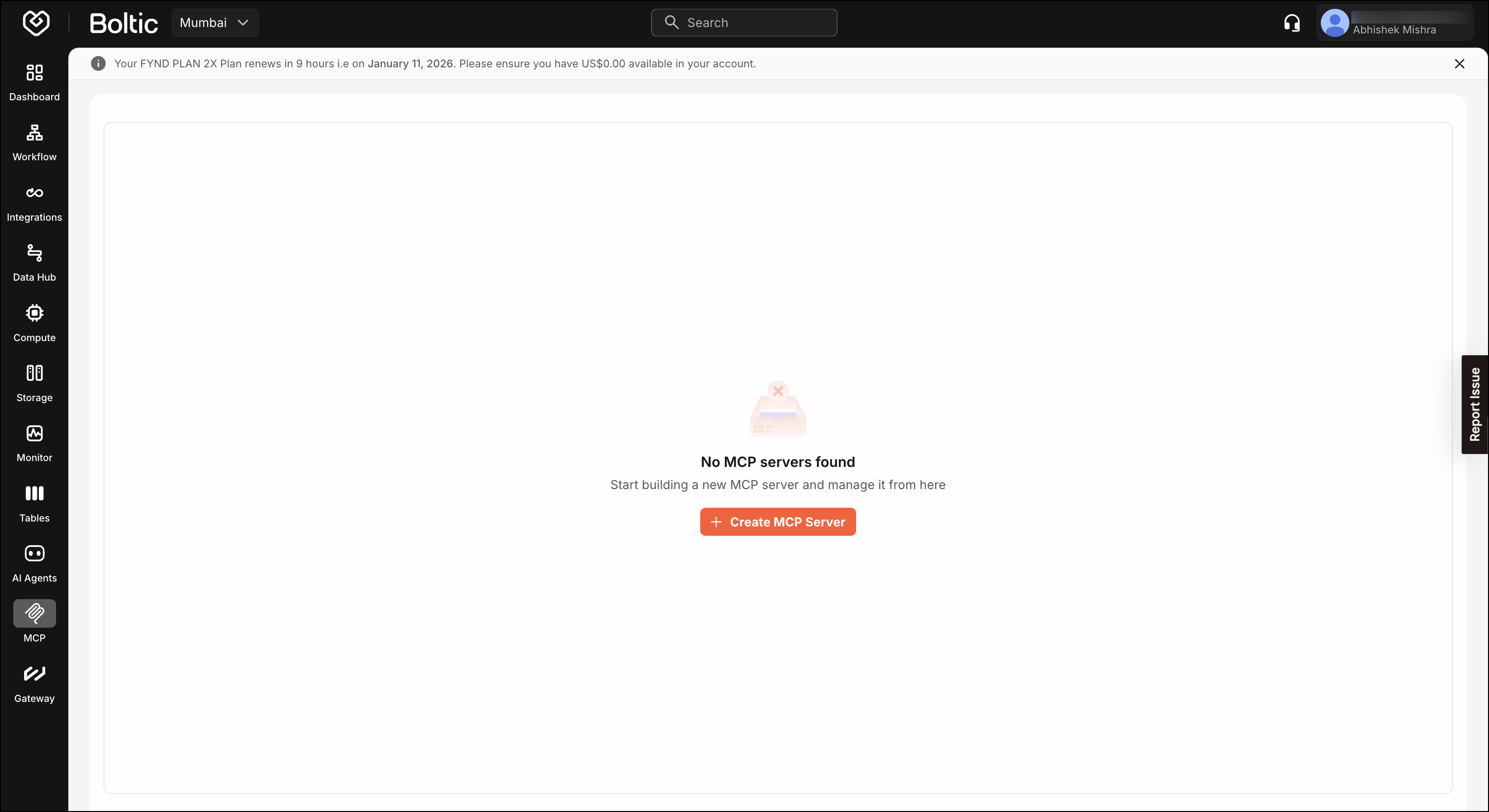
- In the upper-right side of the window, click Create MCP Server. This opens the server creation dialog where you'll configure your new MCP server.
- Enter a descriptive name for your MCP server. Choose a name that clearly indicates the server's purpose and makes it easy to identify among multiple servers. Good naming examples include "Product Catalog API", "Customer Data Server", "E-commerce Operations" and "Internal Tools"
- Click Create to create your MCP server. Once created, you'll be automatically redirected to the server's overview page, where you can begin configuring actions and managing your server settings.
Next Steps
After creating your MCP server, you're ready to configure and deploy it:
- Add Actions: Configure the tools (actions) you want to expose to AI applications. Actions wrap your Workflows, Integrations, and Serverless functions as standardized MCP tools. See the Actions documentation for detailed instructions on creating and configuring actions.
- Test Your Server: Use the Inspector to test your actions before connecting to production AI applications. The Inspector allows you to invoke actions, inspect inputs and outputs, and iterate quickly during development to ensure everything works as expected.
- Connect Your AI Application: Once tested and verified, connect your MCP server to your AI application (e.g., Cursor, Claude Desktop). This enables AI models to discover and use your actions in real-world scenarios.
- Monitor Usage: Use the Logs feature to monitor requests, track usage patterns, debug issues, and gain insights into how your MCP server is being used. This observability helps you optimize performance and troubleshoot problems quickly.